

Black Friday Broadband Deals: A Calm UK Switching Plan
Broadband ‘deals’ can save you real money, or lock you into an 18–24 month contract that quietly gets more expensive. This guide helps you compare like-for-like, check the true total cost, and decide if switching is worth the hours of your time it costs.

When people search black friday broadband deals, they’re usually hoping for one of two outcomes:
- Pay less every month for the same (or better) connection.
- Fix a real problem like buffering, dropouts, or slow uploads.
Both are reasonable. The tricky bit is that broadband deals are rarely “just a price”. They’re a contract: length, fees, mid-contract increases, and what happens if you leave early.
This guide is UK-focused, provider-agnostic, and designed to help you choose calmly.
The simple rule
Key PointStep 1: Decide What You Actually Need (So You Don’t Overbuy Speed)

Black Friday is great at making “more” feel urgent. With broadband, “more” usually means a higher speed tier. Sometimes that’s genuinely useful. Often it’s just expensive reassurance.
Ask two quick questions
- What’s your real pain point? price, speed, dropouts, weak Wi‑Fi in certain rooms, slow uploads for video calls.
- When does it feel worst? evenings, school run time, weekends, only in the back bedroom, only on Wi‑Fi.
If the issue is mostly “Wi‑Fi in the far room”, a mesh system or a better router placement can help more than paying for a faster line. (A faster plan can still be worth it, but it’s not the only lever.)
Step 2: Compare Like-for-Like (Broadband Deals Aren’t Standardised)

To compare broadband deals fairly, line up the basics:
- Contract length: usually 12, 18, or 24 months
- Monthly price: introductory and after any promo period
- Upfront costs: set-up, activation, delivery, router fees
- Mid-contract price rises: whether the price can increase and when
- Exit fees: what you’d pay to leave early
A quick fairness check
Key PointFor an official UK view on what counts as clear and accurate pricing information, the Competition and Markets Authority has practical guidance: CMA guidance on clear and accurate prices.
Step 3: Do the Only Number That Matters: Total Cost Over the Full Contract

If you do one thing, do this. It takes two minutes and removes most of the marketing fog.
Total cost formula
- (monthly price × months)
- + upfront fees
- − guaranteed bill credit (only if it’s automatic and unconditional)
If the deal includes a known mid-contract increase, include that too. If you can’t tell whether the price can rise, treat that as a yellow flag and read the price increase section before you commit.
Step 4: Convert the “Saving” Into Hours Worked (So It Feels Real)
Quick Check
Is switching broadband worth your time?
Enter the extra cost (or saving) over the full contract compared to your current deal. Use a positive number if it costs more, or the amount you’d pay to exit early. Then see what that means in hours.
That switch costs you
0.0 hours
If you buy it weekly
That’s 0.0 hours of take-home time per week.
This is a personal decision tool. It doesn’t tell you what to do. It helps you see the trade-off.
Broadband decisions are emotional because they’re daily. Slow internet can make a home feel stressful. But Black Friday also creates urgency that isn’t real.
Once you’ve seen the hours, ask:
- Will this change remove a daily frustration? (reliable video calls, less buffering, better upload speeds)
- Is the saving big enough to matter? not £1–£2, but something you’ll actually feel monthly
Common Black Friday Broadband Deal Traps (And Calm Fixes)

Trap 1: A low headline price that jumps later
Some deals are cheap for a few months and then rise. That can still be fine, but it needs to be affordable after the promo ends.
Fix: write down the month-by-month pricing or calculate the average cost over the term.
Trap 2: Paying exit fees because you forgot your end date
Switching mid-contract can wipe out savings.
Fix: check your current contract end date and any early termination charges before you shop. If you’re close to the end, you can plan the switch so you don’t pay unnecessary fees.
Trap 3: Upfront fees that make the “deal” mostly a story
Activation fees and delivery can turn a cheap monthly price into a not-so-cheap contract.
Fix: add all upfront fees into the total cost and compare over the full term.
Trap 4: Paying for speed when the real issue is Wi‑Fi coverage
If the line is fine but Wi‑Fi is weak upstairs, a faster package won’t always fix it.
Fix: consider whether you need a mesh system, better router placement, or a wired connection for your most important device.
Where UK Shoppers Usually Find Broadband Deals (And How to Use Them)
Deal hubs change every year. The calm approach is to use comparison tools to understand the market, then check the provider’s own small print before you commit.
- Ofcom broadband and phone advice (consumer guidance)
- Citizens Advice help with phone, internet and TV bills (if costs are rising)
If you do compare across retailers and marketplaces, keep the CMA’s principle in mind: prices should be clear, accurate, and not misleading: CMA price transparency summary.
Returns, Cooling-Off, and The “After” (So You Don’t Get Stuck)

Before you switch, take a moment to check:
- How long installation takes (and whether you’ll be without service)
- Whether you can keep your current service running until the new one is live
- How cancellations work, and what fees apply
For a clear overview of consumer rights and what to do when something goes wrong, Citizens Advice is a solid starting point: Citizens Advice consumer guidance.
A Simple Broadband Deal Checklist (Copy/Paste Before You Buy)
- Need: you know what problem you’re solving (price, reliability, speed, Wi‑Fi coverage)
- Like-for-like: you’ve matched contract length and speed tier
- Total cost: you’ve added monthly × months + upfront fees − guaranteed credit
- Price rises: you understand if and when the price can change
- Exit fees: you checked your current contract before switching
- Time cost: you converted the net cost into hours worked
- Plan B: if you’re unsure, you’ll sleep on it and decide tomorrow
How 118M8 Helps You Choose Calmly (Even on Black Friday)
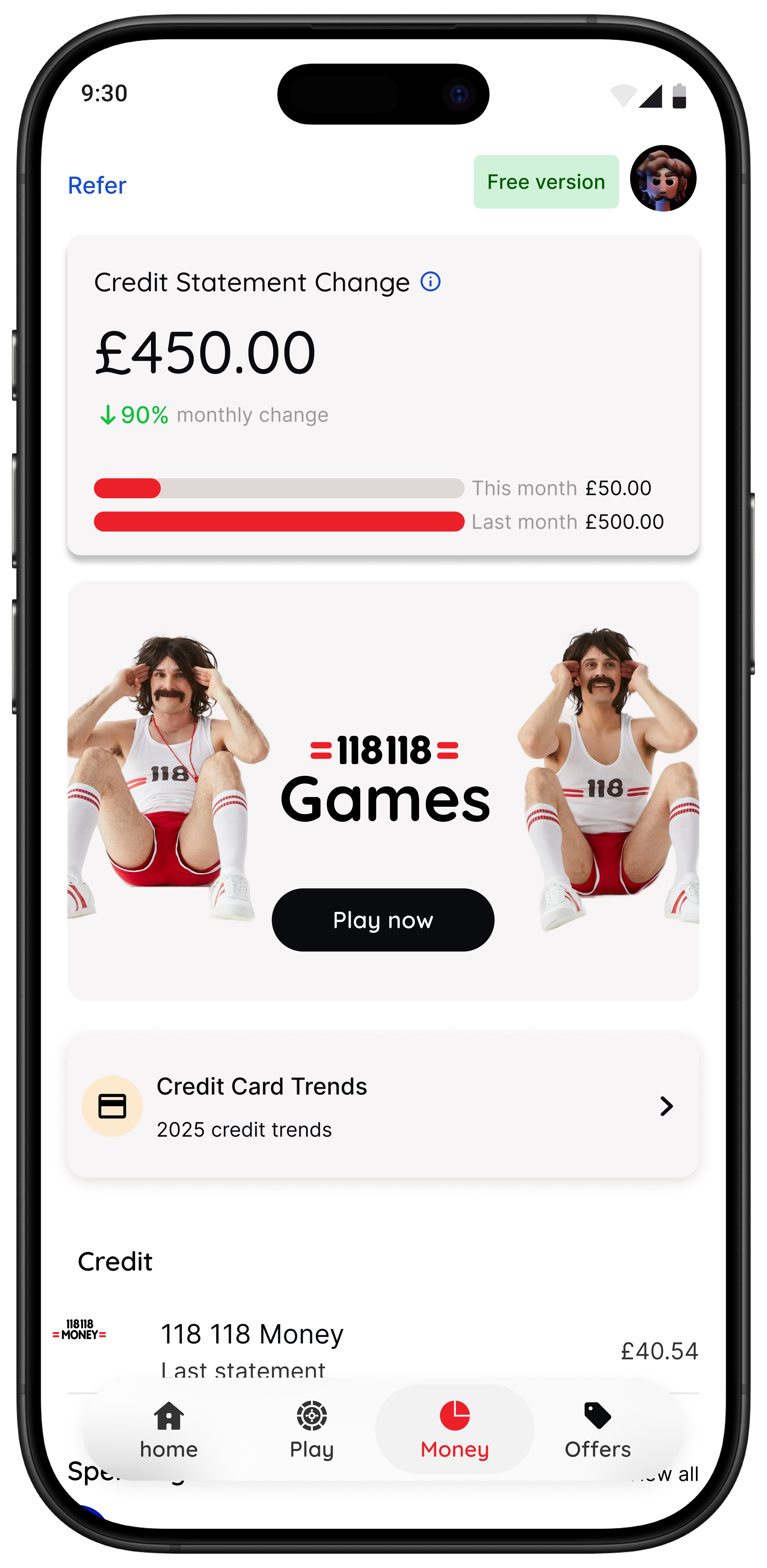
118M8 is a mobile spending companion designed to build Financial Fitness. It helps you make everyday choices without judgement and without the usual guilt tactics.
- Spot it: for 118 118 Money credit card customers, see spending trends and categories so a new contract doesn’t quietly blow up the month
- Clock it: turn the broadband switch cost into hours worked (like the calculator above)
- Pause it: set a Sleep on it reminder so tomorrow-you gets a vote
- Choose it: use the Number Generator game for a neutral moment of reflection
If you want more calm buying guides, you can browse: Black Friday guides.
If you’re also tidying up recurring costs, these can help: Subscription cancellation guides, Credit score guides, and How to cancel Uber One (UK).
To see 118M8 before Black Friday gets loud, here’s the overview: 118M8 app overview.
Black Friday Broadband Deals FAQs
Are Black Friday broadband deals actually cheaper in the UK?
Sometimes, yes, but the saving is often in the first few months (bill credit) or in introductory pricing that can rise mid-contract. The safest approach is to compare the full contract cost including set-up fees, router delivery, and any known mid-contract price rises.
What’s the biggest trap with broadband deals?
Comparing only the headline monthly price. Two deals can both say “£25 a month” but have different upfront fees, different contract lengths, different annual price rises, and different exit fees.
Is a ‘bill credit’ broadband deal worth it?
It can be, if the credit is guaranteed and the contract still wins on total cost over the full term. Treat bill credit like a discount spread over time: you still need the monthly price to be sustainable after the promo period.
Should I switch broadband on Black Friday if my contract hasn’t ended?
Only if you’ve checked exit fees and the net saving still works. For many households, the calm approach is to plan ahead: check your contract end date, then switch when you can avoid early termination charges.
How do I know what speed I actually need?
Start with what you do at peak times (evenings): video calls, streaming, gaming, multiple devices. If your current connection is stable and fast enough, the best “deal” may simply be a cheaper plan at the same speed, not upgrading to the highest package.
Stock images by Jakub Żerdzicki, Lauren Mancke, Compare Fibre, rupixen and Cosmin Ursea via Unsplash.