

Council Tax Exemption: Who Qualifies and How to Claim
Council tax is one of those bills that feels fixed. But exemptions do exist, and if you qualify, the saving can be immediate. This guide explains the main council tax exemption routes (and the common edge cases), what proof councils usually ask for, and a calm, admin-light way to apply and follow up.
Quick answer: council tax exemption in the UK
Key PointCouncil tax exemption means a property is treated as having no council tax to pay for a period because it fits a specific legal ‘exempt dwelling’ class (for example, it’s lived in only by full-time students, it’s empty because the owner moved into a care home, or it’s unoccupied after a death).
Most people miss exemptions because they assume council tax is fixed. A better assumption is: the bill is correct until you check the facts.
Start here: (1) confirm whether you need an exemption or a discount, (2) identify the exemption class that matches your situation, (3) apply with evidence, then (4) ask about backdating.
Council tax exemption vs discount (and why it matters)
People often search for council tax exemption when what they really need is one of three things:
- Exemption: the dwelling is removed from council tax for a period (the bill is effectively zero for that period).
- Discount: the bill is reduced (for example, single person discount).
- Disregard: certain people do not count when working out how many “adults” live in the home. Disregards can lead to a discount, or in some cases an exemption if nobody counts.
GOV.UK gives the simplest overview of discounts and exemptions, and it’s a good place to sanity-check the language your council uses: council tax discounts and council tax overview.
A calm eligibility check (10 minutes)
If you want the fastest route to the right answer, don’t start by reading every exemption class. Start by describing your situation in plain English:
- Who lives there right now? (full-time students, apprentices, carers, someone with SMI, nobody)
- Is the property furnished? (fully furnished, partly, unfurnished)
- Why is it empty? (moved into care, probate, major repair, between tenants)
- When did that situation start? (exact date if you can)
- What proof can you get this week? (letter, certificate, benefit award notice)
Then check your council’s own page for council tax reductions. Every council words it slightly differently, but the underlying categories are similar across the UK.
A quick ‘don’t panic’ note
Key PointIf you think you qualify, apply even if you’re missing one piece of evidence. Most councils will open the claim and ask for the missing document.
And if money is tight, don’t ignore the bill while you wait. Tell the council you’ve applied and ask what they expect you to pay in the meantime so arrears don’t build up.
Common council tax exemption routes (the ones people actually use)
Below are the most common “real life” exemptions and near-exemptions people encounter. The exact class names can vary by nation and council, so treat this as a map, then confirm the match on your local authority’s site.
1) Full-time students (often a full exemption for the property)
In many households, the key question isn’t “Are students exempt?” It’s who counts in the home.
- If everyone living at the property is a full-time student, the property is typically treated as exempt.
- If students live with non-students, council tax may still be payable, but students are usually disregarded, which can reduce the bill depending on the mix.
Citizens Advice has a clear explanation of how student status and household mix affects council tax: council tax guidance.

2) Severe mental impairment (SMI) (discount or exemption depending on who else lives there)
SMI is one of the most-missed council tax reductions because people assume it’s “benefits only” or worry it’s stigmatising. In practice, it’s an admin category used to decide who counts for council tax.
Generally, councils ask for:
- Medical certification (often a GP or consultant form confirming severe mental impairment)
- Proof of qualifying benefits (the list depends on national rules and council guidance)
If the person with SMI is the only adult in the home, this can sometimes lead to a full exemption. If they live with one other eligible adult, it may lead to a discount.
Because details can be sensitive, it’s worth reading a trusted explainer before you apply. Citizens Advice covers SMI council tax reductions and evidence: check if you can pay less council tax.
3) Moved into a care home or hospital (property may be exempt if empty)
If someone has moved permanently into a care home, hospice, or hospital and the home they left is now empty, there are scenarios where the property can be treated as exempt for council tax purposes.
Typical evidence councils request:
- confirmation of the move / residency (letter from the care provider or hospital)
- proof the previous home is unoccupied and usually unfurnished

4) Empty properties (this is where rules vary most)
Empty home council tax rules are the most local-variation-heavy part of the system. Some properties get exemptions for specific reasons; others get no exemption and may even be charged extra after a period.
Two practical points that reduce mistakes:
- Empty is not the same as unfurnished. Your council will usually ask both.
- The reason matters. Empty because of probate is different from empty because you’re between tenants.
If you’re seeing an “empty homes premium” added to the bill, this UK Parliament Commons Library explainer is a reliable overview of how premiums work and when they can apply: empty homes premium on council tax.
Empty after a death (probate)
If a property becomes empty because the owner has died, there may be an exemption for a period, often linked to probate and when the property becomes unoccupied. Your council will usually ask for the death certificate and probate/letters of administration status.
Shelter’s housing advice explains council tax support and where exemptions and reductions may apply in England: help with council tax.
Major repair or structural work
Some councils have reductions or exemptions where a home is unoccupied because it needs major structural work. Evidence might include surveyor reports, builder contracts, or photos. The exact threshold is council-dependent, so check your local policy carefully.
How to claim a council tax exemption (step-by-step)
Most councils let you apply online. The calm goal is to do it once, do it clearly, and avoid repeated back-and-forth.
- Find the right form. Search your council site for “council tax exemption” and the category (student, SMI, empty property, care home).
- Collect evidence. One PDF per document is ideal. If you have paper letters, take a flat, well-lit photo.
- Write a one-paragraph summary. Include: address, exemption reason, start date, who lives there, and a list of documents attached.
- Ask about backdating. If you qualified earlier, say so and include the earlier start date with evidence.
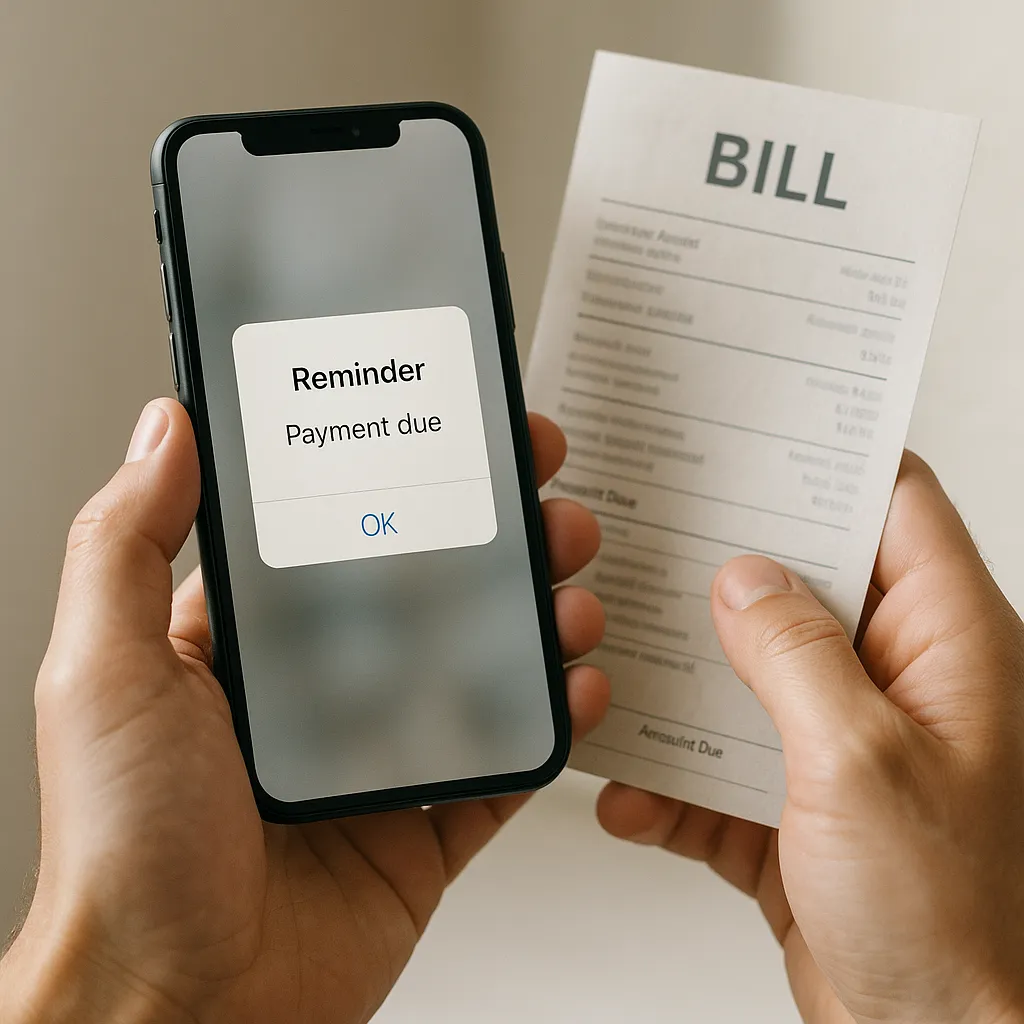
- Set a follow-up reminder. If you haven’t heard back in 14 days, chase politely with your reference number.
Common mistakes (and quick fixes)
- Mixing up exemption and discount. Fix: ask the council, “Is this a full exemption for the dwelling, or a discount based on who counts?”
- Using the tenancy start date instead of the real start date. Fix: use the date the situation actually changed (moved out, moved into care, course started).
- Not including proof of status. Fix: upload the student certificate / benefit proof / medical form as early as possible.
- Assuming it applies automatically. Fix: most councils need an application or confirmation, even if they already hold some info.
- Letting the bill drift into arrears. Fix: tell the council you’ve applied and ask for an interim payment plan.
If the council says no (what to do next)
If your claim is refused, try not to treat it as a final “no.” Treat it as a request for clarification.
- Request the decision in writing so you can see the reason and the dates they used.
- Check for a mismatch (wrong exemption class, wrong start date, missing evidence).
- Ask for reconsideration and attach any missing documents.
- Escalate if needed. In England, disagreements about council tax liability and reductions can be appealed to the Valuation Tribunal for England after the council’s process. (Scotland and Wales have equivalent routes.)
Make council tax admin easier next month (a 2-minute habit)
Most overspending doesn’t start with a “bad decision.” It starts with being tired and trying to clear admin fast. Council tax is a perfect place to build a calm pause habit:
- Spot it: when the bill lands, don’t pay immediately. Check the basics (band, discounts, exemptions).
- Clock it: translate the monthly payment into hours worked. (If it’s wrong, it’s not just money, it’s time.)
- Choose it: decide one action: apply, query, or set a reminder to deal with it properly.
- Pause it: set a 24-hour reminder so it doesn’t slide into late fees.
If you like tools that make “pause” feel easy rather than heavy, 118M8’s Wait and Sleep on it flows are designed for exactly that moment. You’re not being told what to do. You’re being given space to choose.
About 118M8: a financial fitness mate for everyday decisions
Council tax exemptions are one example of a bigger theme: when money is tight, small admin wins protect your budget without cutting joy. 118M8 helps with the in-the-moment part: turning prices into hours worked, adding a 24-hour pause, and tracking the wins when you choose not to spend.
- Use Wait to clock the real cost of a purchase in time
- Tap Sleep on it for a 24-hour reminder before you commit
- Use the Number Generator for a neutral pause when you feel pressured
Keep reading: Blog home · Council Tax · Subscriptions
Frequently Asked Questions
What is a council tax exemption?
A council tax exemption is when a property is treated as having no council tax to pay for a period because it fits an exempt dwelling class, such as all-occupant student households, certain empty-home situations, or properties left empty after someone moves into care.
Is council tax exemption the same as a discount?
No. Exemptions are property-based and can reduce the bill to zero for the relevant period. Discounts reduce the bill but do not remove it entirely. Disregards affect who counts as an adult, which can lead to discounts or, in some cases, exemptions.
Can I backdate a council tax exemption claim?
Often yes, if you can show you met the conditions earlier, but councils vary. Apply as soon as you can and include the date you believe the exemption started, along with evidence.
Do students have to pay council tax?
Full-time students are usually disregarded for council tax. If everyone in the home is a full-time student, the property is typically exempt. If students live with non-students, council tax may still be payable, but the bill may be reduced depending on the household.
What is severe mental impairment council tax exemption?
Severe mental impairment (SMI) can mean a person is disregarded for council tax if they meet medical and benefit criteria. Depending on who else lives in the property, this can lead to a discount or, if nobody counts, an exemption.
What evidence do I need for a council tax exemption?
It depends on the exemption. Common evidence includes a student certificate, medical certification and proof of qualifying benefits for SMI, proof of vacancy dates for empty properties, or documents linked to probate or care home stays. Your council will tell you what they accept.
What if my council refuses my exemption?
Ask for the decision in writing, request reconsideration with any missing evidence, and follow the formal appeal route if needed (for example via the Valuation Tribunal in England after the council process).