


Does Overdraft Affect Credit Score? UK Guide
If you use an overdraft now and then, you’re not “bad with money”. But the way you use it can show up on your credit file. Here’s what typically helps, what can hurt, and how to steady things before a mortgage, car finance, or a new card.
Quick Answer
Does overdraft affect credit score in the UK?
It can. In the UK, an arranged overdraft is a form of credit. It may appear on your credit report and it can influence how lenders view you, especially if you are regularly close to the limit. The bigger risk is an unarranged overdraft (or going over your arranged limit), because that can lead to missed payments, arrears markers, or other negative signals.
The calm way to think about it is: an overdraft itself is not “good” or “bad”. It’s how often you rely on it, whether you go past the limit, and whether anything gets reported as late.
Overdrafts in plain English: arranged vs unarranged
An overdraft is borrowing on your current account. If you go below zero, you are effectively using credit.
- Arranged overdraft: you and your bank agree a limit in advance. You can dip into it up to that amount.
- Unarranged overdraft: you go below zero without an agreed limit, or you go beyond the arranged limit.
MoneyHelper has a clear overview of how overdrafts work, including arranged and unarranged use: overdrafts explained.
How an overdraft can show up on your credit report
Current accounts don’t all report in exactly the same way, but overdrafts are commonly treated as a credit facility attached to the account. That means the account can contribute information such as:
- Whether the overdraft is arranged and the size of the limit
- Whether you are using it (and how consistently you are in it)
- Any missed payments or arrears if the account becomes problematic
- Any default or debt collection activity in more serious cases
Focus on the report line items, not just the score. If you want a quick primer on how UK scores work across the agencies, our guide Average Credit Score UK explains ranges and why the number varies.
MoneyHelper’s guide to credit scores and reports is also a strong baseline: credit scores and credit reports.

What actually hurts your credit score with overdrafts (most of the time)
If an overdraft affects your credit score, it is usually because it creates a pattern that looks hard to manage. Common triggers include:
1) Being in your overdraft most days
Regularly living in the overdraft can be a sign that your monthly income and outgoings are too tight. Even if you “clear it” on payday, a consistent pattern can still make lenders pause.
2) Being at or near the limit
This is similar to high credit card utilisation. If you’re repeatedly using most of the limit, it can look like you don’t have much breathing space.
3) Going beyond your arranged limit (unarranged overdraft)
Unarranged use can mean fees or higher charges, and it increases the chance something bounces or becomes overdue. That’s where credit file damage can start.
4) Missed payments triggered by the overdraft
Even if the overdraft itself is the issue, the damage often comes from a knock-on effect: a direct debit fails, a bill is marked late, or an account slips into arrears.
A quick note on overdraft costs (why small slips get expensive)
UK overdraft pricing changed in 2020. One big aim was to make charges clearer and reduce the sharp cost jump for unarranged overdrafts. The Financial Conduct Authority (FCA) set new rules so providers generally charge a single interest rate for arranged and unarranged overdrafts (with limited exceptions), rather than fixed daily fees and different “tiers” for many customers.
If you want the primary source, the FCA summarises the overdraft reforms here: overdraft users set to benefit from FCA reforms.
Cost isn’t the same as credit scoring, but expensive overdraft use can create a cycle where you’re more likely to miss something else. That’s why it’s worth noticing early.
10-Minute Check
How to check if overdraft use is affecting you
- Look at your last 3 months. How often were you in the overdraft? How close to the limit did you get?
- Check your credit report line for the current account. Look for any arrears, missed payments, or markers you don’t recognise.
- Scan for “domino” bills. Did any direct debits fail because your balance went too low?
- Check all three agencies if you can, because not every bank reports to every CRA.
- If something looks wrong, challenge it. Start with the bank (the data owner), and also raise it with the agency.
If you’re correcting inaccurate personal data, the Information Commissioner’s Office explains your right to get data corrected: your right to get your data corrected.

Calm fixes that usually help (without extreme budgeting)
You don’t need a perfect spreadsheet. The goal is to reduce “surprises” and give yourself a little buffer so the overdraft becomes an option, not the default.
1) Choose one buffer number
Pick a minimum balance you want to stay above (for example £50 or £100). It’s not a moral target. It’s a practical guardrail.
2) Make payday do two jobs
On payday, clear the overdraft and immediately set aside the buffer (even if it’s small). If you wait “until later in the month”, later rarely comes.
3) Move the risky direct debits
If your rent, mobile, or subscriptions come out just before payday, that’s where overdrafts appear. Many providers let you change the payment date. If you want a quick sweep of recurring costs, our Subscriptions guides are a practical place to start.
4) Treat unarranged overdraft as the red line
If there’s one rule to protect your credit file, it’s this: avoid going beyond the agreed limit. If you’re close, ask your bank about options (a temporary limit change, a repayment plan, or fee support depending on your situation).
If you’re applying for a mortgage soon
If a mortgage or car finance application is on the horizon, lenders will look at both your credit file and affordability. You can’t “hack” this in a week, but you can reduce red flags.
- Keep balances steady where possible (avoid frequent dips into unarranged overdraft).
- Reduce application noise (don’t stack new credit applications).
- Fix errors first, because they can take time to resolve.
If your score recently dropped for other reasons, our guide Why Has My Credit Score Gone Down? helps you narrow it down quickly.
About 118M8: a calmer way to pause spending
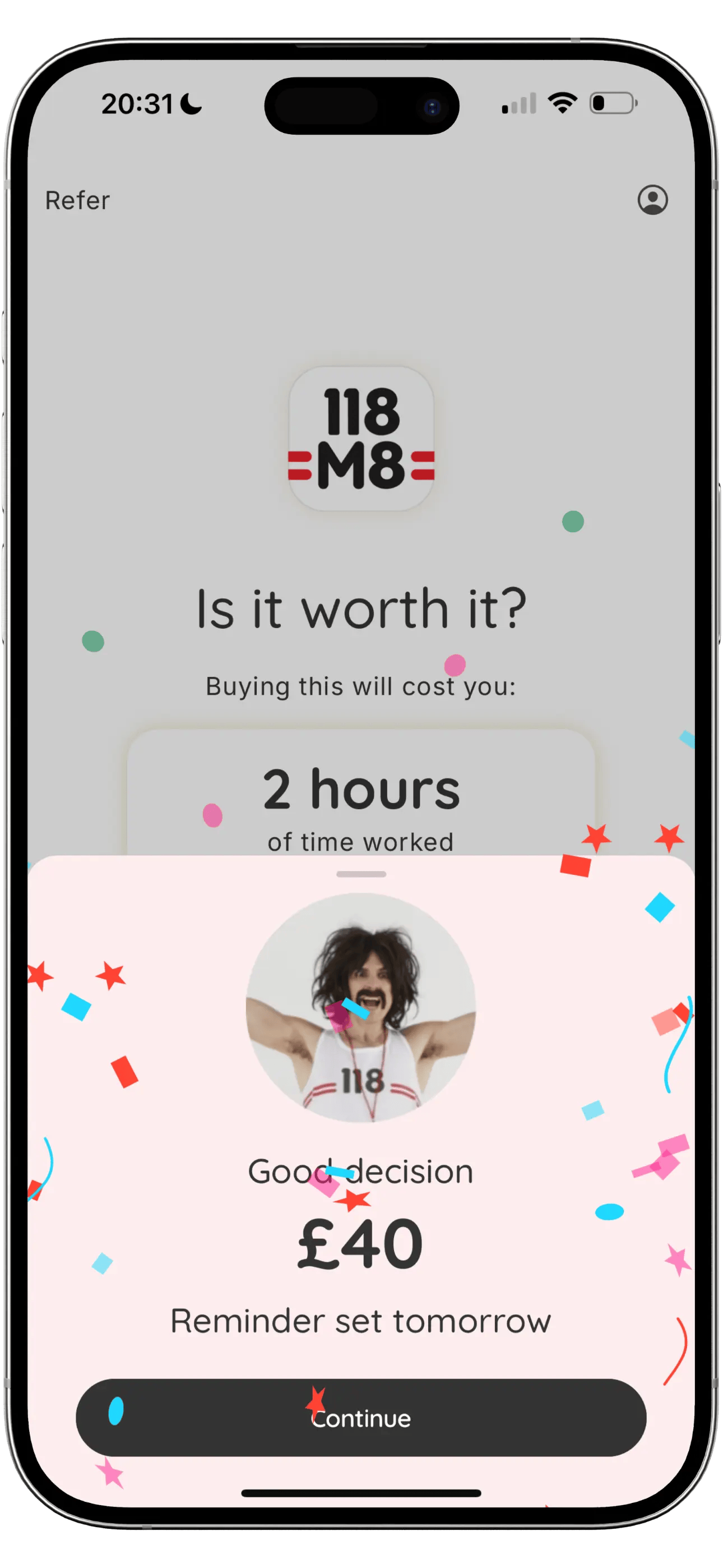
Overdrafts often aren’t about big purchases. They’re about timing and small decisions stacking up. 118M8 helps you pause before you spend by showing the time cost behind a price in hours worked, so you can choose what’s worth it in the moment.
- See prices as hours of work (based on your take-home pay)
- Use “Sleep on it” for a 24-hour pause before buying
- Track the wins when you skip a purchase and keep the buffer
Keep learning: Blog home · Credit Scores · Subscriptions
Frequently Asked Questions
Does overdraft affect credit score in the UK?
It can. An arranged overdraft is a credit facility and may appear on your credit report. Using it occasionally is often neutral, but frequent reliance, being close to the limit, or slipping into unarranged overdraft can look risky and may lead to negative markers if anything goes unpaid.
Is arranged overdraft bad for your credit score?
Not automatically. The risk is the pattern: staying in it most of the time, repeatedly using a large share of the limit, or using it to cover bills that then bounce.
What is the difference between arranged and unarranged overdraft?
Arranged is agreed with your bank up to a set limit. Unarranged means you go overdrawn without an agreed limit or beyond the agreed limit.
How long does an overdraft issue stay on your credit report?
It depends on what was reported. The overdraft facility can show while the account is open. If it led to missed payments or default, those markers can stay on your file for years. Your report will show the dates and the current status.
Will closing an overdraft improve my credit score?
It may help if it stops you from drifting negative, but it’s not a guaranteed score boost. The best move is the one that keeps your payments on time and your day-to-day money stable.
Does using an overdraft affect a mortgage application?
It can. Mortgage lenders review your credit file and affordability. Regular overdraft use, especially unarranged use, can raise questions. If you can, aim for a few months of steady account management before applying.